Tegallalang Rice Terrace: Visitor Guide for Bali
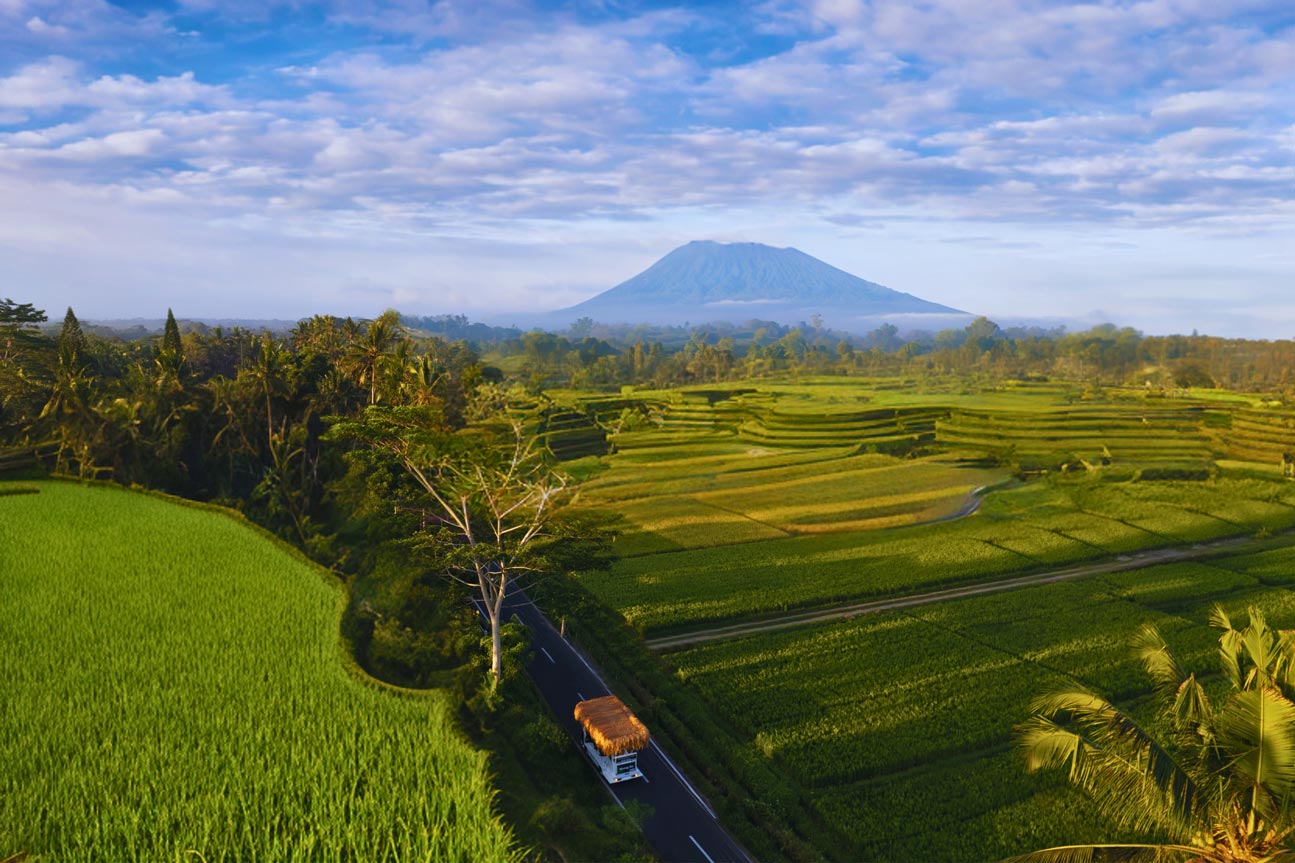
Tegallalang Rice Terrace is one of those views that stops you mid-sentence. The terraces cascade down a steep valley north of Ubud in long, curving steps, each one catching the light differently depending on the season and time of day. They have been shaped over generations by a cooperative irrigation system called subak, and the result is a working agricultural landscape that also happens to be one of the most photographed spots in Bali.
This guide covers what makes Tegallalang worth the trip, how to get the most out of your visit, and how to close the day properly with a Tikibus cocktail evening back on the coast.
Where Tegallalang Fits in Bali
The terraces sit along the main road between Ubud and Kintamani, roughly 20 minutes north of central Ubud by scooter or car. The village of Tegallalang gives the site its name, and the farming community here has cultivated rice in these specific terraces for centuries.
Unlike some rice terrace areas in Bali that are largely flat and viewed from a distance, Tegallalang drops sharply into a valley. The depth of the descent is part of what makes the view so dramatic, and walking into and through the terraces puts you right inside that landscape rather than looking at it from above.
The Subak System: Why This Place Matters Culturally
Subak is a traditional Balinese water management system that coordinates irrigation across entire communities. Farmers along the same water source cooperate to share the flow, with scheduling and maintenance governed collectively rather than by any individual. The system is ancient — references to it appear in Balinese inscriptions going back more than a thousand years — and it is recognized by UNESCO as part of the Cultural Landscape of Bali.
What this means in practice at Tegallalang is that the terraces you are walking through are not a preserved relic or a recreation for tourists. They are an active farming landscape shaped by ongoing cooperative work between local families. That context makes the visit considerably more interesting than it would be otherwise.
What to Do at the Terraces
Walk the terraces
The main activity is walking down into the valley and through the rice paddies themselves. Narrow paths wind between the paddy walls, and the terrain is uneven in places, particularly after rain. Sturdy shoes with grip are strongly recommended over sandals. The descent into the valley is satisfying, and the climb back up will work your legs more than you expect.
Jungle swings and photo platforms
Several operators along the terrace ridge offer jungle swings — large swings positioned over the valley that provide a dramatic aerial perspective. These have become extremely popular and are widely photographed. Operators set their own pricing, so rates vary and are best confirmed on the spot. Expect queues during peak hours.
Photo platforms and viewing decks are also positioned along the ridge, some attached to cafes and warung restaurants that use the view as their main draw.
Photography
Tegallalang rewards patience. The most striking images come from getting down into the terraces rather than shooting from the road above. Early morning light is the most photogenic, with softer shadows and mist sometimes settling in the valley. Midday is harder to work with from a light perspective, though the terraces are still visually impressive.
The green intensity of the paddies varies with the growing season. Fully grown rice creates the dense, vivid green that appears in most photographs. At different points in the cycle the paddies may be flooded with water, brown with cut stalks, or being replanted — each stage has its own visual quality.
Practical Tips for Your Visit
- Arrive early. Before 8 AM is ideal. By mid-morning the road fills with tour groups, and the most popular viewpoints can get crowded.
- Check current entry requirements. A small contribution or entry fee is sometimes collected at access points into the terraces. This goes toward maintenance and supporting the local farming community. Confirm current arrangements when you arrive.
- Wear appropriate footwear. The paths between paddy walls are narrow and can be slippery. Sandals are manageable on dry days but become a liability in wet conditions.
- Bring sun protection. The ridge area along the road is exposed. A hat and sunscreen make a real difference, especially from late morning onward.
- Eat at a local warung. Several small restaurants along the ridge serve Balinese food with views directly over the terraces. The food is generally good and the setting is hard to beat.
- Be respectful of the farming work. The terraces are an active agricultural site. Do not step on paddy walls in a way that could damage the structure, and follow any guidance from local staff about where visitors are and are not welcome.
When to Go
The dry season, April through October, is generally the most comfortable period for visiting. Paths are drier and easier to navigate, and the skies are more reliably clear. That said, green season brings a different kind of beauty — dramatic clouds, occasional mist in the valley, and often fewer visitors willing to brave the rain.
Combine With Other Ubud Sights
Tegallalang sits on the road north from Ubud, which also passes through areas popular for craft workshops and other temples. If you are building a full day in the Ubud area, the top attractions guide for Ubud is a useful starting point for planning the rest of your itinerary.
For visitors who want to push further into Bali’s less visited corners, the adventure activities guide for Ubud includes options that pair well with a Tegallalang morning.
Close the Day with Tikibus in Canggu
After a day moving through rice terraces and jungle, the right way to end is with something cold in your hand and good music around you. Tikibus Bali departs daily from Berawa, Canggu — a mobile cocktail bar built on a bus, with an onboard mixologist serving craft cocktails and mocktails across a 90-minute ride.
Departures run at 14:00, 16:00, 18:00, 20:00, and 22:00. The All-Inclusive package is $34 and covers unlimited cocktails, mocktails, snacks, and the sound system. The A La Carte option is $10 admission with a two-drink minimum, with drinks ordered individually. Both are paid on the spot by cash or Visa. Booking is through WhatsApp, with up to 10 guests per bus (two buses for larger groups).
Tegallalang in the morning, Tikibus after dark. Bali does not get much better than that.
Ready to ride?
Hop on the Tikibus in Berawa, Canggu and discover Bali with a cocktail in hand.