Bali Rainy Season: Why Ubud Shines in the Wet
Most travellers arrive in Bali chasing blue skies. A smaller, wiser group shows up between November and March, when the rain turns the island a shade of green you will not see in any other season. If you are flexible on weather, Bali’s rainy season deserves a serious look — especially Ubud, where the monsoon is most theatrical and the crowds are thinnest.
When Is the Bali Rainy Season?
Bali’s wet season runs from approximately November through March, with December and January seeing the heaviest rainfall. The rain typically arrives in short, intense bursts — usually in the late afternoon or evening — rather than grey, all-day drizzle. Mornings are often clear and warm.
Temperatures stay comfortable throughout, generally ranging from the high 20s to low 30s Celsius. The humidity climbs, but the rain provides relief. Most days you will have several usable hours of dry weather to work with.
The dry season runs from roughly April through October. May, June, and September offer good weather with fewer visitors than the peak months of July and August. If you want the best of both worlds — reliable sun and manageable crowds — those shoulder months are worth targeting.
Why Ubud in Particular?
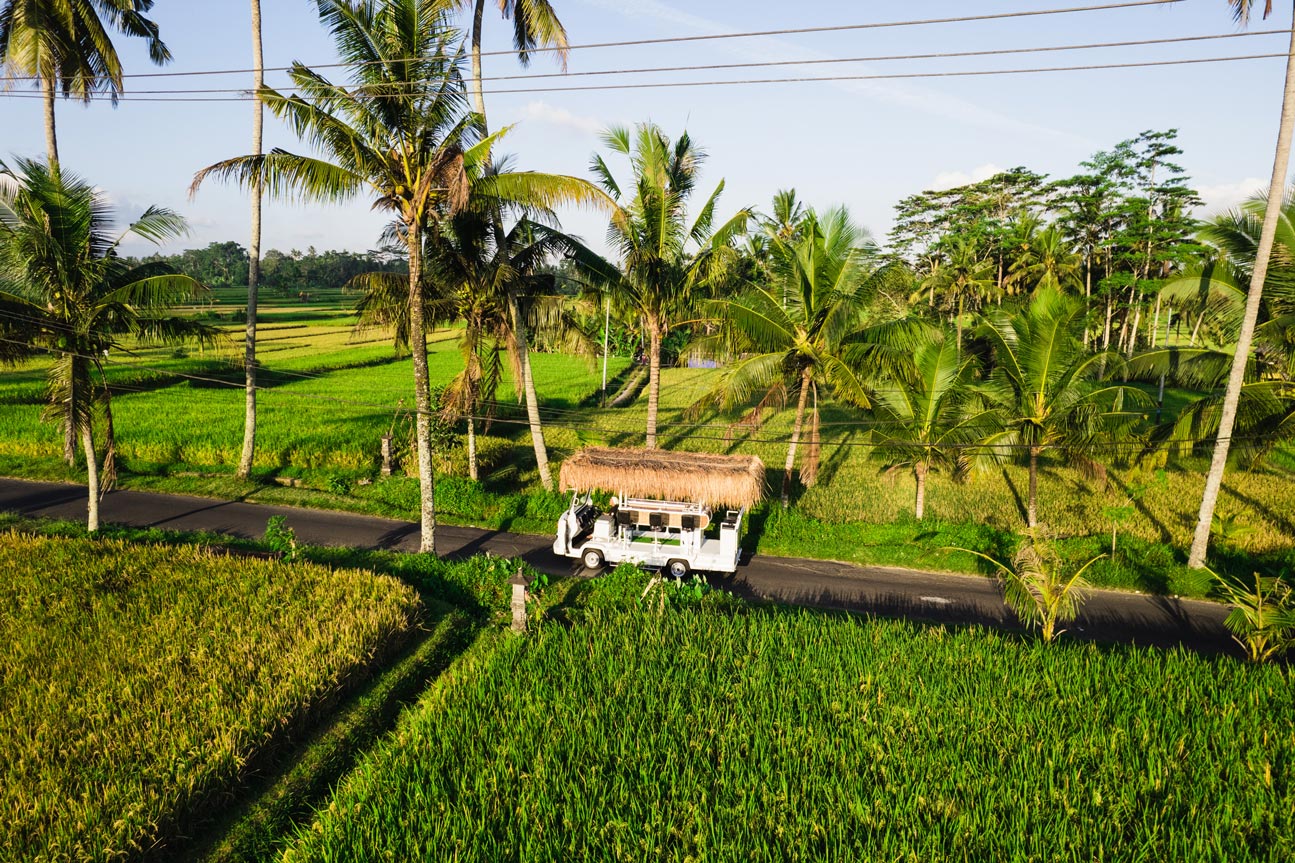
Ubud sits in Bali’s inland highlands, about 1.5 to 2 hours from Canggu by car. The elevation means the landscape responds more dramatically to the monsoon than the flat southern coast does. Rice terraces that look attractive in the dry season become extraordinary in the wet — saturated greens, mist rolling across the valley edges, waterfalls running at full flow.
The crowds thin out meaningfully. Popular spots like the Tegalalang rice terraces and the Monkey Forest are genuinely quieter. You get more space, more time to look at things properly, and more natural interaction with locals going about their lives.
Ubud is worth a day trip from Canggu at any time of year. In the rainy season, it is particularly rewarding.
What the Landscape Actually Looks Like
The Bali rainy season transforms the inland landscape in ways that are hard to photograph accurately. The rice terraces at Tegalalang shift from golden and dry to a dense, layered green. Paths between the paddies stay muddy but passable with the right footwear.
Waterfalls throughout the Ubud area reach their peak flow. Tegenungan waterfall, accessible by car from central Ubud, is a reliable and impressive option in the wet months. The water volume is substantially higher and the surrounding vegetation is at its most lush.
The Campuhan Ridge Walk, a popular low-effort trail just outside central Ubud, becomes particularly atmospheric. Mist sits in the valley below the ridge. It is best attempted in the early morning before the day’s rain arrives.
What to Do on a Rainy Day in Ubud
When the rain sets in for the afternoon, Ubud offers plenty of ways to spend the time well.
Cultural sites and museums: The Blanco Renaissance Museum and the Neka Art Museum house strong collections of Balinese and international art. Both are easy to spend a couple of hours in without feeling rushed.
Cooking classes: Several operators run half-day Balinese cooking classes that typically start with a visit to a local market. This is a practical and enjoyable way to understand the cuisine from the inside. Booking ahead is sensible regardless of season.
Traditional dance performances: The Kecak fire dance is staged most evenings in and around Ubud, including at Pura Dalem Ubud. Rain does not typically cancel outdoor performances, and watching the ceremony with rain in the background adds something to the atmosphere rather than subtracting from it.
Spa and bodywork: Ubud has a dense concentration of quality massage and wellness studios. Rates are generally lower than in the south and the quality is high. A two-hour session on a rainy afternoon is not a consolation prize — it is the point.
Craft workshops: Silversmithing, batik dyeing, and wood carving workshops are available through various studios. Most run on a drop-in or short-notice booking basis.
Practical Advice for Rainy Season Travel
What to pack: A lightweight waterproof layer, quick-dry clothing, and closed shoes or sandals with grip. Flip-flops are workable in most situations but unreliable on muddy trails.
Timing your outdoor activities: Go out in the morning. The rain most commonly arrives in the afternoon or evening. Plan temple visits, rice terrace walks, and market trips for before noon.
Getting to Ubud from Canggu: The most reliable option is a private driver. The road through Denpasar can be congested; some drivers take a longer but faster route through the centre of the island. Budget around 1.5 to 2.5 hours each way. Grab is available but less consistent for longer intercity trips.
Respecting temple etiquette: This applies year-round but is worth repeating. Cover shoulders and knees. Do not step on offerings. Speak quietly in temple compounds. If there is a ceremony in progress, observe from a respectful distance unless invited closer.
Accommodation: Mid-range and higher-end guesthouses in Ubud often drop prices during the wet season. If you are flexible on dates, this is when you get the best value for a nicer room.
For a general guide to getting around Bali across any season, see our complete Bali trip tips guide. For a more detailed day-by-day look at Ubud specifically, the top Ubud attractions guide covers the main sites worth planning around.
Returning to Canggu: End the Day Right
Ubud makes an excellent day trip, but Tikibus is in Canggu — so the evening brings you back to the coast.
Tikibus is a mobile cocktail bar built on a bus, based in Berawa, Canggu. An onboard mixologist serves craft cocktails and mocktails while up to 10 guests per bus take in the evening scenery on a 90-minute tour. After a full day in Ubud, it is a genuinely easy way to unwind — no decisions to make, no venue to navigate, just good drinks and a moving view.
Tours depart daily at 14:00, 16:00, 18:00, 20:00, and 22:00. The All-Inclusive package is $34 (unlimited cocktails, mocktails, snacks, sound system, and free WiFi). The A La Carte option is $10 admission with a two-drink minimum, drinks paid per item. Payment is on the spot — cash or Visa — and booking is via WhatsApp.
See the full packages and menu for current cocktail options and what is included.
Bali’s rainy season asks for a slower pace than peak season. Ubud in the wet is the right place to find it. Come back to Canggu when the rain starts and let the evening take care of itself.
Ready to ride?
Hop on the Tikibus in Berawa, Canggu and discover Bali with a cocktail in hand.