Ubud Itinerary: 4 Days for First-Time Visitors
First-time in Bali? Ubud is where most visitors realise the island is more layered than the beach brochures suggest. Terraced rice fields, ancient temples, dense jungle, morning markets, cooking classes, yoga at sunrise — it is a lot to absorb in a short trip. This Ubud itinerary maps out four full days so you can move through it all without rushing, and makes a case for ending at least one evening in Canggu on a craft cocktail bus.
The dry season runs from roughly March to September: the best window for outdoor activities and clear mornings on Mount Batur. Ubud sits about 1.5 to 2 hours from Ngurah Rai Airport depending on traffic.
Day 1: Arrive, Orient, and Immerse in Culture
Give yourself the morning to settle in and get your bearings. Ubud’s compact centre is walkable, but the surrounding area is best explored by scooter or with a private driver — both are easy to arrange through your accommodation.
Ubud Palace and the Art Market
Start your cultural introduction at Puri Saren Agung, the Ubud Royal Palace, a beautifully preserved example of traditional Balinese architecture in the middle of town. Right across the road is the Ubud Art Market: three floors of batik, silver jewellery, wooden carvings, and textiles. Prices are negotiable. Go before noon when it is coolest and least crowded.
Agung Rai Museum of Art
In the afternoon, visit ARMA — the Agung Rai Museum of Art — which holds one of the strongest collections of Balinese painting on the island, along with rotating exhibitions of modern work. Allocate two hours minimum; the gardens alone are worth lingering in.
Traditional Dance Performance
End day one with a Kecak or Legong dance performance, usually held at the palace or at one of the dedicated performance spaces nearby. The Kecak fire dance is particularly striking at dusk. These performances sell out during peak season, so ask your accommodation to book in advance.
Day 2: Rice Terraces, Forest, and the Ridge
This is the day for Ubud’s most iconic natural landmarks. Start early — before 8:00 AM if possible — to avoid the midday heat and the tour groups that arrive around 9:00.
Tegalalang Rice Terraces
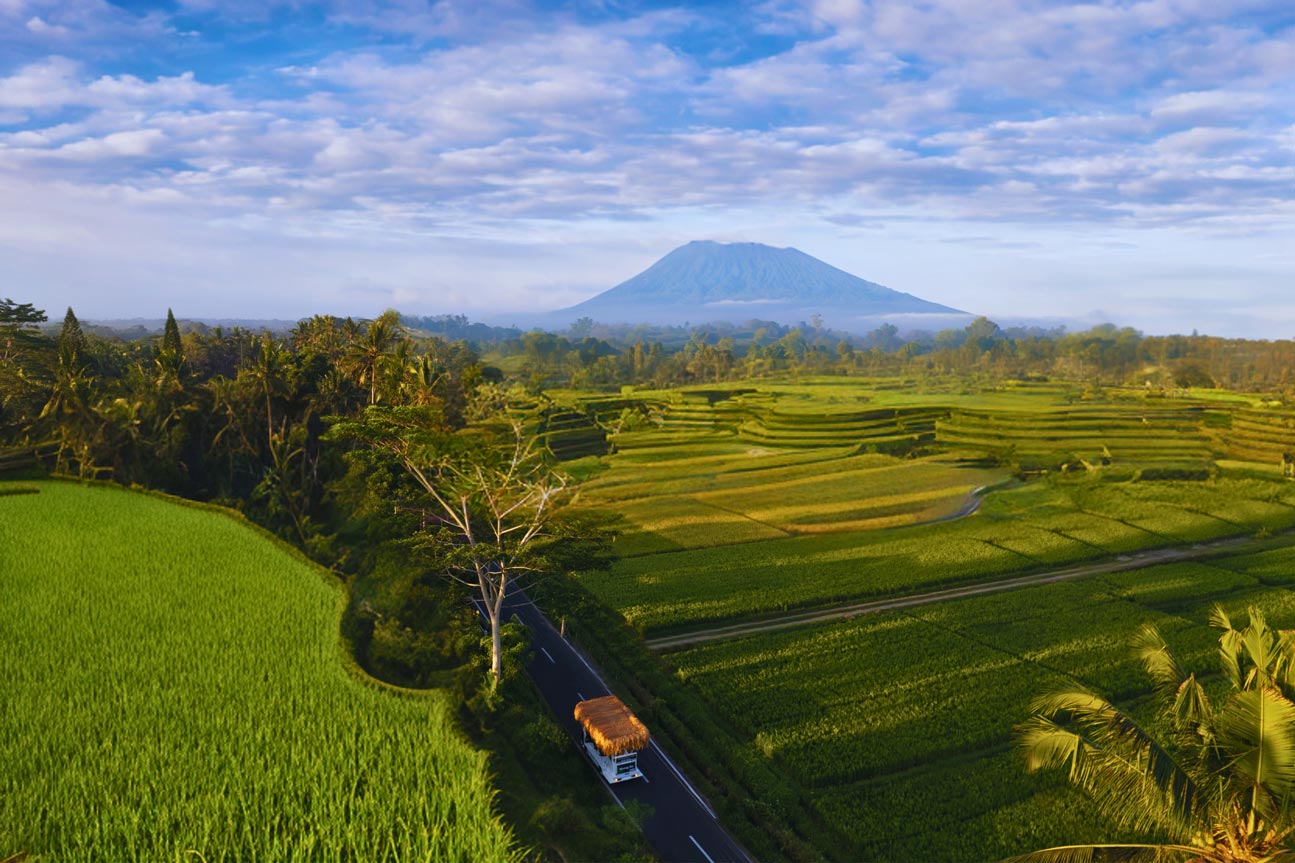
The Tegalalang Rice Terraces are the most photographed landscape in inland Bali, and they look exactly as good in person. The terraces follow the contours of a steep valley and are maintained by the traditional Subak cooperative irrigation system, a UNESCO-recognised practice. Walk down through the paddy paths, watch farmers at work, and if you are feeling brave, try one of the jungle swings cantilevered out over the valley edge. Check out our full guide to the beauty of Tegalalang.
Sacred Monkey Forest
After the terraces, make your way to the Sacred Monkey Forest Sanctuary in central Ubud. Around 700 long-tailed macaques share the space with three 14th-century temples. It is lively, unpredictable, and genuinely entertaining. Keep your bags zipped, put your sunglasses away, and do not make eye contact with the larger males. Staff are on hand to intervene if things get territorial.
Campuhan Ridge Walk
Late afternoon is the right time for the Campuhan Ridge Walk. This free, two-kilometre trail follows a narrow ridge between two river valleys and offers open views of the surrounding landscape. The late-afternoon light on the grass and terraces is extraordinary. The walk takes around an hour and feels calm even when busy.
Day 3: Cooking, Crafts, and Deeper Bali
By day three, the rhythm of Ubud starts to feel familiar. Use this as your day to go slower and go deeper.
Morning Market and Cooking Class
Pasar Pagi, the morning market near central Ubud, is best visited before 7:00 AM when local vendors are still setting up. Fresh produce, spices, rice cakes, and offerings — it is a different Ubud from the one tourists usually see. Many cooking schools use the market as the first stop before moving into a hands-on Balinese cooking class. Dishes vary by school but commonly include Nasi Campur, satay, and traditional sambal. Most classes run three to four hours.
Artisan Workshops
In the afternoon, head to the craft villages surrounding Ubud. Mas is known for woodcarving. Celuk specialises in silver and goldsmiths. Batuan has a long tradition of intricate ink-and-wash painting. A private driver can connect these in a relaxed half-day loop.
Dinner
Ubud has a genuinely good restaurant scene. Look for places sourcing locally and cooking Balinese rather than approximations of it. Eat somewhere you can sit outside and hear the jungle.
Day 4: Adventure, Waterfalls, and a Night in Canggu
Save the physical peak for last.
Sunrise on Mount Batur
Mount Batur is an active volcano 1,717 metres above sea level. The standard trek departs the base at around 4:00 AM and reaches the summit before sunrise — a two-to-three hour climb over volcanic rock with some steep sections. The view from the top across the caldera lake and Bali’s coast is one of the island’s most memorable experiences. The hike is rated moderate; book with a guide the day before.
Waterfalls in the Afternoon
After descending and getting breakfast, spend the afternoon at one of the waterfalls in Ubud’s surroundings. Tegenungan is the most accessible: a powerful cascade a short drive from central Ubud. For something quieter, Tibumana and several others in the area require a short jungle walk but are significantly less visited. Pack a swimming costume and wear shoes you do not mind getting wet.
Evening: Board the Tikibus in Canggu
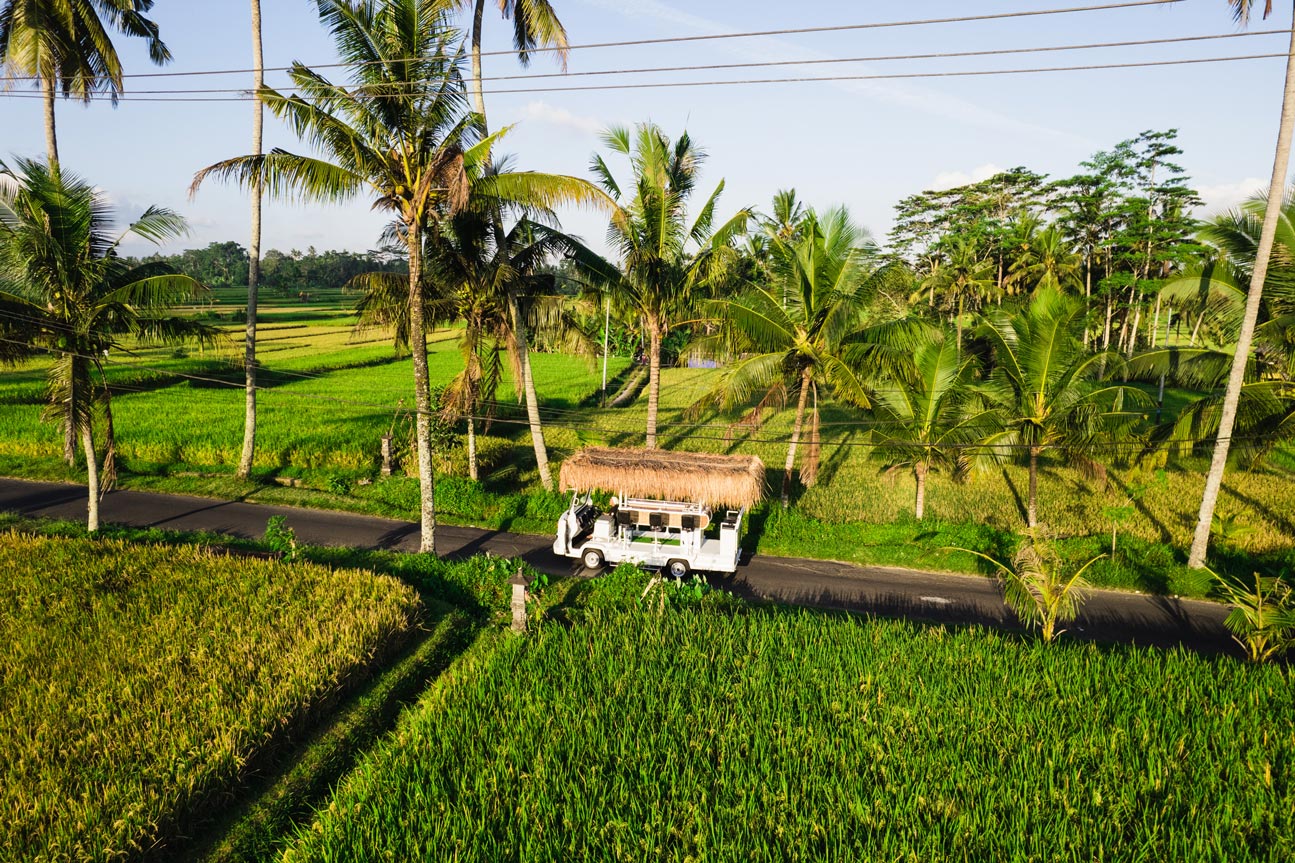
End your Ubud itinerary with an evening that belongs to Canggu — about 45 minutes west. Tikibus is a craft cocktail bar built on a bus, based in Berawa, Canggu, with an onboard mixologist who serves cocktails and mocktails as the bus rolls through the night. Up to 10 guests per bus, and the tour runs roughly 90 minutes. Daily departures at 14:00, 16:00, 18:00, 20:00, and 22:00.
The All-Inclusive package is $34 and covers unlimited cocktails, mocktails, snacks, the sound system, and free WiFi. The A La Carte option is $10 admission with a 2-drink minimum and drinks billed individually. Pay on the spot by cash or Visa; book via WhatsApp. It is a proper send-off for a proper Bali trip.
Practical Notes for Your Ubud Itinerary
A few things that make the difference between a smooth trip and a stressful one:
- Transport: Renting a scooter gives you the most flexibility, but Ubud’s narrow roads and occasional steep hills are genuinely challenging for first-timers. A private driver for day trips is reliable and usually affordable when booked through accommodation.
- Temple dress: All temples require covered shoulders and knees. Many entrance gates have sarongs available to borrow, but carrying your own is easier.
- Timing: Ubud gets warm and busy between 10:00 AM and 3:00 PM. Structure your outdoor activities around the early morning and late afternoon.
- Best season: March to September for reliable weather. The wet season (October to February) brings afternoon rain but also fewer tourists and more dramatic skies.
For more on what to see during your time there, read our guide to top attractions in Ubud and our tips on how to make the most of your Bali trip.
Ready for the Canggu chapter of your trip? Book your spot on the Tikibus via WhatsApp and pick the departure time that suits the end of your day.
Ready to ride?
Hop on the Tikibus in Berawa, Canggu and discover Bali with a cocktail in hand.