Cultural Activities in Ubud Worth Your Time
Ubud earns its reputation as Bali’s cultural capital not because the guidebooks say so but because the evidence is everywhere you look. Ancient temples sit in the middle of a living monkey sanctuary. Rice terraces maintained by the same cooperative irrigation system for centuries frame the horizon north of town. Dance performances that UNESCO has recognised as intangible cultural heritage happen in palace courtyards on most evenings. If you are interested in cultural activities in Ubud, the challenge is not finding things to do — it is choosing where to start.
Traditional Balinese Dance Performances
Balinese dance is one of the most immediately striking art forms you will encounter anywhere, and Ubud is the best place in Bali to see it performed well. The Legong is the form most visitors encounter first: precise, intricate, performed by young women in elaborate gilded headdresses, telling stories from Hindu epics through hand gestures and eye movements that carry specific meaning within the tradition. The Barong and the Kecak are different in character — the Barong is a ritual drama pitting good against evil, while the Kecak involves a large chorus of men producing a layered vocal percussion that fills the air without a single instrument.
Ubud Palace hosts nightly performances in its open-air courtyard. The Saraswati Temple is another excellent venue, where the lotus pond behind the stage adds to the atmosphere considerably. Performances typically begin at dusk and run for around an hour.
Sacred Temples and Spiritual Sites
Ubud sits at the intersection of several significant pilgrimage routes, and the town and its surroundings contain a dense concentration of Hindu temples. Three are worth singling out for cultural activities in Ubud specifically.
Tirta Empul is an ancient water temple where worshippers come to purify themselves in spring-fed pools, a ritual with roots going back more than a thousand years. Visitors are welcome to observe and, in designated areas, to participate. The ceremonial process is unhurried and genuinely moving to witness.
Ubud Palace functions as both a working ceremonial site and a performance venue. The carved stone architecture of its outer walls and inner courtyards has been maintained across generations of the royal family that still oversees the site.
Saraswati Temple, dedicated to the Hindu goddess of knowledge and the arts, sits at the end of a walkway lined with lotus blossoms. The lotus pond in front of the main shrine is one of the most photographed spots in Ubud — deservedly so — but the temple itself is active, not merely ornamental.
When visiting any temple, cover your shoulders and knees, and either bring a sarong or rent one at the entrance. This is not optional, and most temples enforce it.
The Sacred Monkey Forest Sanctuary
The Sacred Monkey Forest Sanctuary is where cultural and natural experience genuinely merge. Over 700 long-tailed macaques live within a protected grove that also contains three active Hindu temples. The integration is deliberate — the monkeys are considered sacred within the temple complex, and their presence is part of the site’s spiritual identity rather than an attraction bolted on for tourism.
Walk the shaded paths through the grove, observe the social behaviour of the macaques at close range, and take time in the temple areas. Keep personal items secured and follow the posted guidelines about not feeding the animals or making sudden movements.
For a deeper look at this site, our post on discovering the Ubud Monkey Forest covers the history and practical details in full.
Tegallalang Rice Terrace and the Subak System
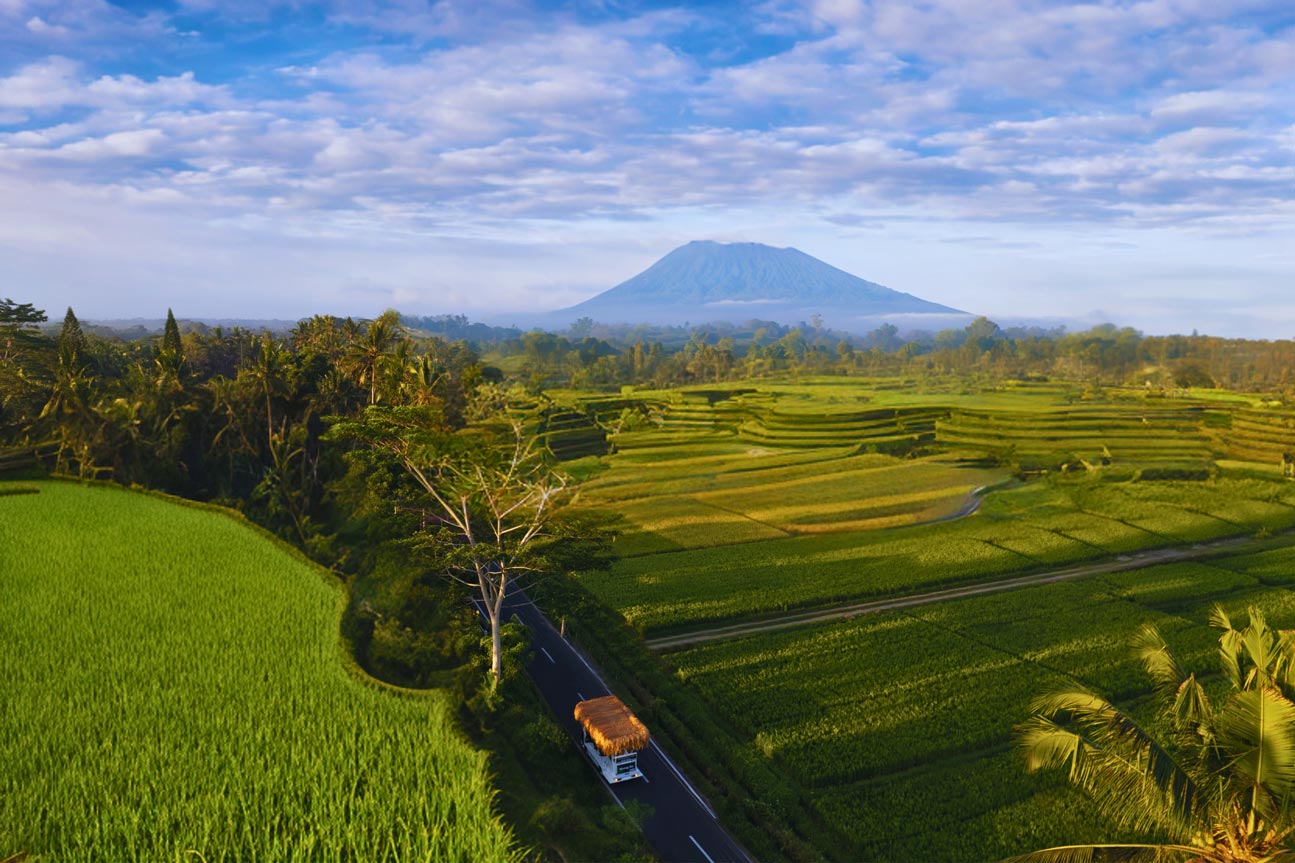
The Tegallalang Rice Terrace, a short drive north of Ubud, is visually spectacular but also culturally significant in ways that are easy to miss if you only stop for photographs. The terraced paddies are maintained using the Subak system, a cooperative water-management method that Balinese farming communities have used for around a thousand years. UNESCO has recognised Subak landscapes as World Heritage Sites for exactly this reason — they represent an ongoing social and agricultural tradition, not a historical relic.
The best time to visit is early morning, when the light is flattering and the terraces have not yet filled with other visitors. Walk the paths between the paddies rather than viewing from the road. Talk to the farmers working the fields if they are open to it; many are.
Our article unveiling the beauty of Tegallalang Rice Terrace goes into the history and visitor experience in more detail.
Ubud Art Market and Craft Traditions
The Ubud Art Market, located opposite the palace in the centre of town, is where Balinese craft traditions become tangible and purchasable. You will find hand-carved wooden masks and figurines, batik and ikat textiles, silver jewellery, rattan and bamboo goods, and paintings in both traditional and contemporary Balinese styles.
The market operates on the expectation that prices are negotiated. Start below what you are willing to pay, be patient and good-humoured, and you will almost always reach an agreeable number. The artisans who sell here are skilled at their work, and the pieces are genuine — this is not mass-produced merchandise.
If you want to go beyond buying and actually learn a craft, several studios in and around Ubud offer workshops in wood carving, batik making, and silver jewellery. These run from around an hour to a full day depending on the medium.
Campuhan Ridge Walk
Not every cultural activity in Ubud involves a ticket. The Campuhan Ridge Walk is a free trail that begins just west of the town centre and winds along a narrow ridgeline above the confluence of two rivers. The walk takes around an hour at a relaxed pace, and the views across the surrounding hills and village rooftops are a reminder of why artists and writers have been coming to Ubud for generations.
Set out before 8 a.m. to catch the best light and avoid the heat of the day.
End the Day on the Tikibus
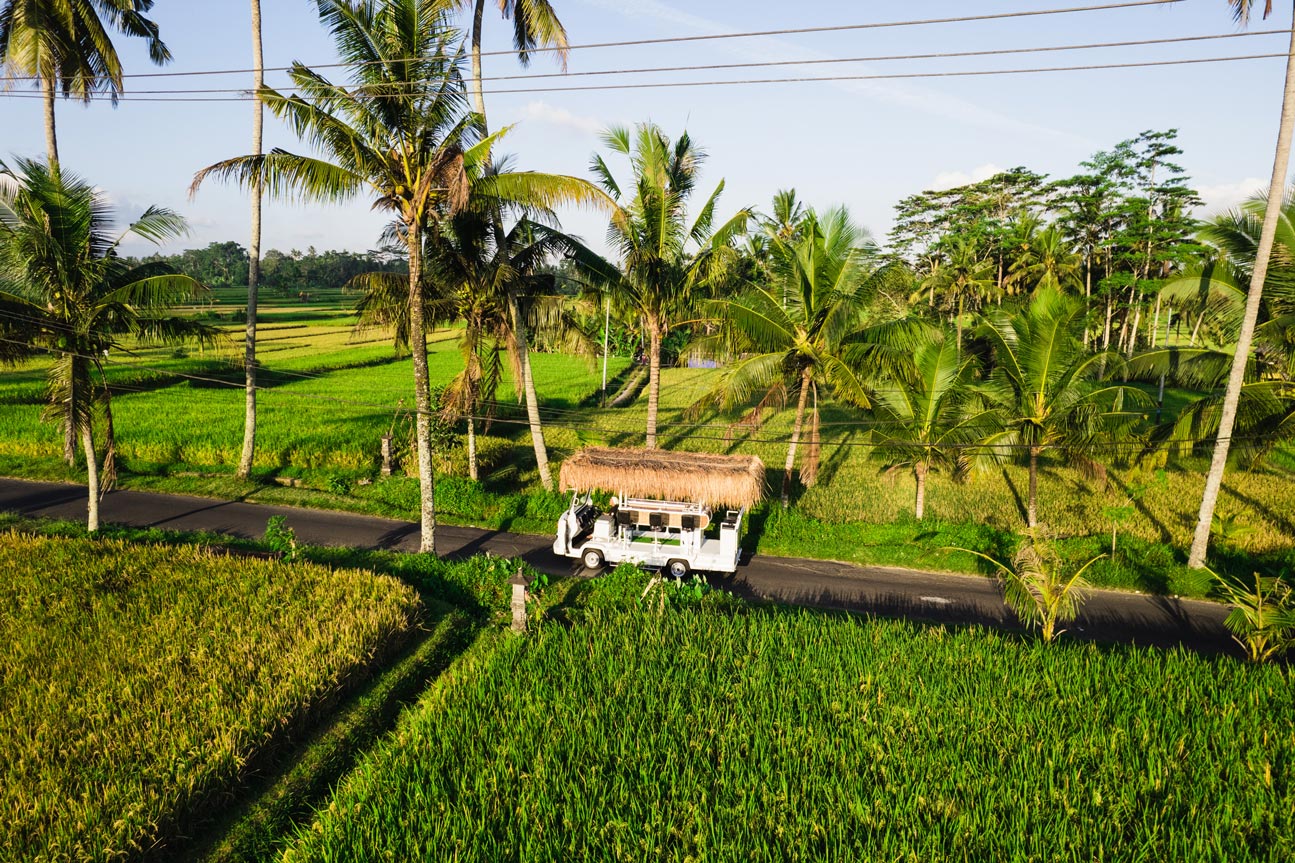
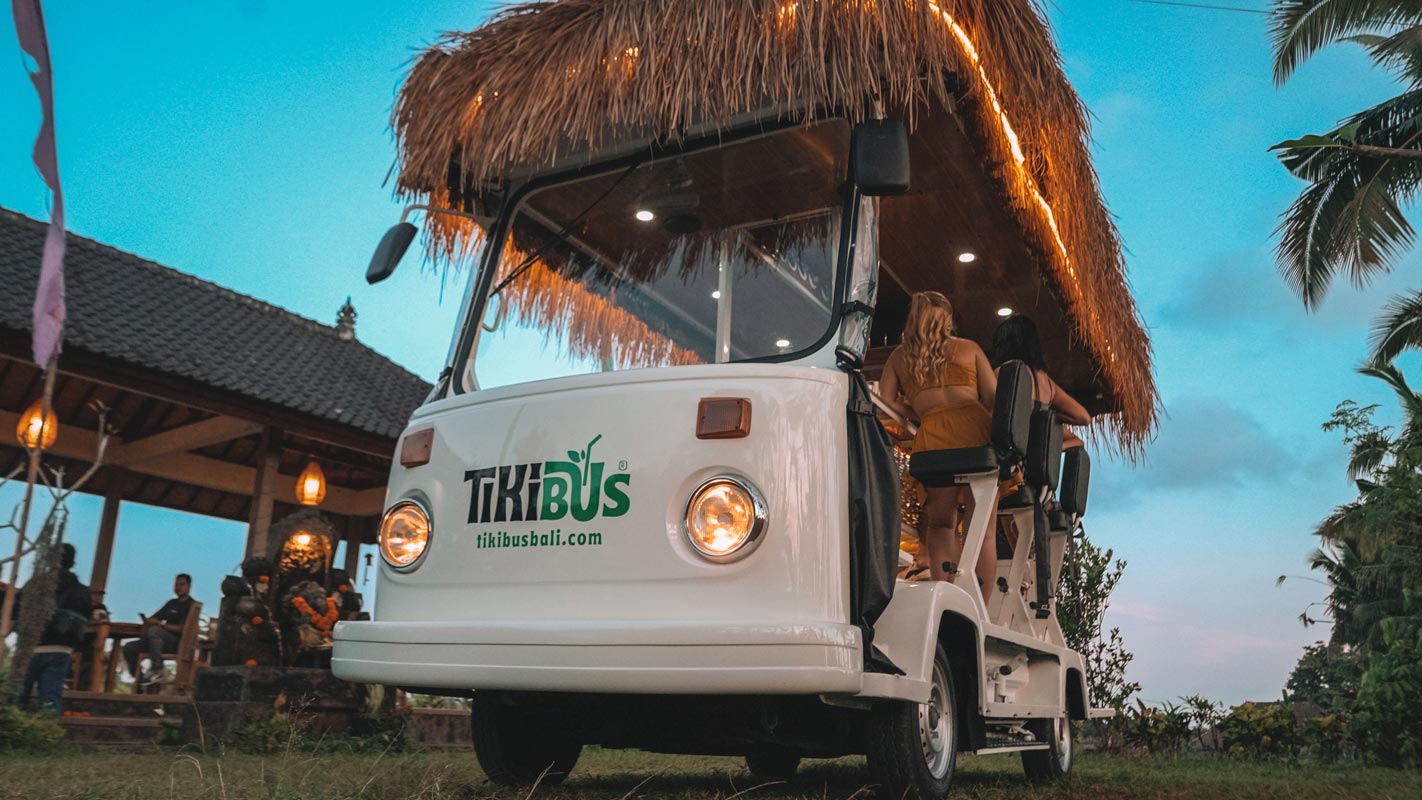
If you are spending your days in Ubud and your evenings on the south coast, there is a natural way to close out the cultural experience once you are back in Canggu. The Tikibus is a mobile cocktail bar built on a bus, based in Berawa, Canggu. An onboard mixologist serves craft cocktails and mocktails on a roughly 90-minute ride, with departures daily at 14:00, 16:00, 18:00, 20:00, and 22:00.
The All-Inclusive package is $34 and covers unlimited cocktails, mocktails, snacks, the sound system, and WiFi. The A La Carte option starts at $10 admission with drinks ordered and paid individually. Up to 10 guests per bus. Book via WhatsApp, and pay on the spot by cash or Visa.
After a day of temples and terraces, letting someone else drive while you sit back with a well-made cocktail is an easy decision.
For more ideas on what to do beyond the main circuit, see our guide to the top attractions in Ubud.
Ready to make an evening of it? Check the Tikibus packages and book your seat.
Ready to ride?
Hop on the Tikibus in Berawa, Canggu and discover Bali with a cocktail in hand.